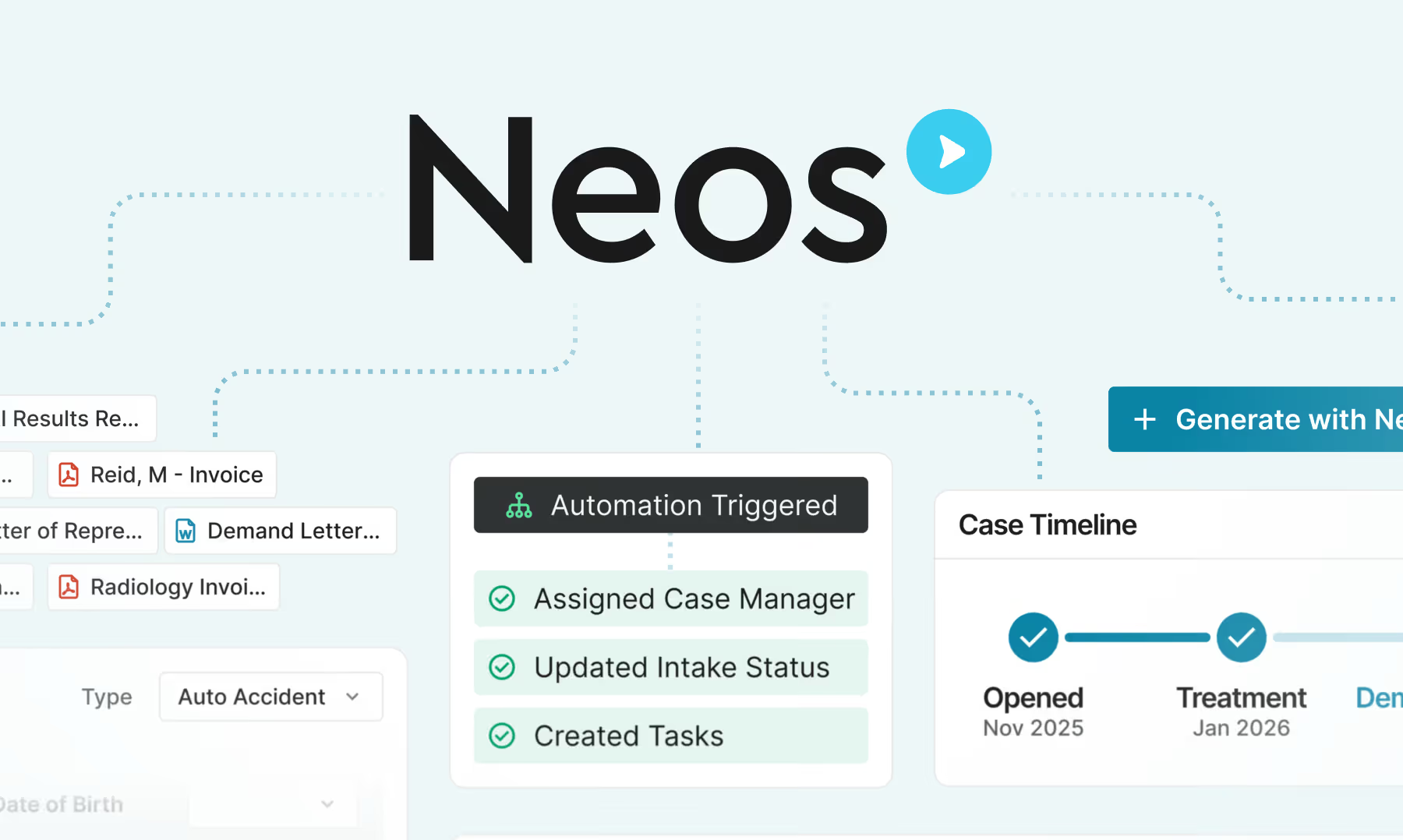
Most case management software holds the intake, the providers, the deadlines and the notes, and it tracks the tasks. But the work that moves a case forward, like building the medical chronology and drafting a demand letter, still happens somewhere else: by hand, page by page, or in an outside tool working from what the system sends it.
At Assembly's first Customer Town Hall, CEO Jonah Paransky pointed to what NeosAI already does inside the case, including case and document summaries and questions answered through chat. Then he laid out what comes next:
"We've also been focused on bringing AI to market that does real work for your firm, the work your team spends a lot of its time on today. Our first focus is Demands Plus, bringing AI to bear on medical chronologies and demand letters."
Jonah Paransky, Chief Executive Officer, Assembly Software
From helping with the work to finishing it
AI that summarizes the records and helps draft sections saves the team time. The team still has to assemble that work into the documents a case needs: a chronology an attorney can check and a demand an adjuster has to answer. That step is where the hours go.
Neos Demands Plus takes on that step. It builds the medical chronology from the records already in the case in Neos, with each entry linked to its source, then drafts the demand letter from that chronology and the rest of the file. The team starts from a finished draft instead of a blank page, and the work stays in the case, with the chronology current as new records arrive, instead of on a copy sent to a vendor.
Three questions to ask of AI in legal case management
As AI shows up in more legal software, three questions separate a tool a firm can rely on from one it has to babysit.
- Does it finish the work, or only help with it? Summaries and drafted sections still leave the team to assemble the chronology and the demand. A finished draft leaves the team to review it.
- Can your team check every fact against its source? A draft is only as useful as the time it takes to verify. If every entry links to the source it came from, checking takes minutes. If it doesn't, the team rereads the records anyway.
- Does judgment stay with your attorney? AI can extract and draft from the record. Causation, damages, case value and the merits of the case belong to the attorney, and nothing should go out without the attorney's approval.
What firms learned when they put it to work
Neos Demands Plus was built to answer all three. The chronology and the demand come back as finished drafts, every fact opens to its source, and attorney approval is required before anything goes out.
Firms in the Neos Demands Plus beta used it on their own cases and told Assembly plainly what worked and what didn't. Assembly is grateful to every one of them. Here is what they reported:
- Time back from the records. The hours that went into pulling dates, providers and treatments out of the records one page at a time are going back to case strategy, negotiation and clients.
- Demand preparation in about 30 minutes, down from 3 to 10 or more hours by hand, attorney review included.
- Demand letters in the firm's own voice.
One of those firms summed up why the chronology matters to its team:
"I think it's a huge, huge addition to that workflow. Because literally people will spend hours... writing a med chron out of the documents."
For a firm whose growth depends on moving cases toward resolution, those hours are capacity. Less preparation per case means an experienced team can take on more cases without giving up careful review or time with clients.
Where it goes from here
Neos Demands Plus is the newest chapter in a story that started in 1985, when PINS became the first case management system built for personal injury firms. PINS became Needles, a trial attorney later built Trialworks, and the two came together as Assembly Software in 2019. Many firms have run their cases on Needles and Trialworks for years, and that trust means a great deal to everyone at Assembly.
For the firms Assembly serves, the next change is about who carries the load. Neos organizes the case, NeosAI helps your team summarize records, pull out key fields and draft sections, and Neos Demands Plus drafts the finished chronology and demand letter. It is the first of many tools built to finish the work, not just help with it, and more are on the way to Neos.
To see what Neos Demands Plus could look like in your cases, visit the Neos Demands Plus page, where you can request a consultation.
Frequently asked questions
What should AI in legal case management do?
AI in legal case management should work from the case file itself and go past helping with the preparation work to finishing it: building the medical chronology and drafting the demand from it. Every fact should link back to its source so the team can check it, and judgment on causation, damages and case value should stay with the attorney.
Who can use Neos Demands Plus?
Neos Demands Plus is in early access with firms already running on Neos and will be generally available later this fall. Neos Demands Plus works from the case file in Neos and runs on NeosAI Platinum. Any firm, on Neos or another system, can request a consultation to see what Neos Demands Plus could look like in its cases.